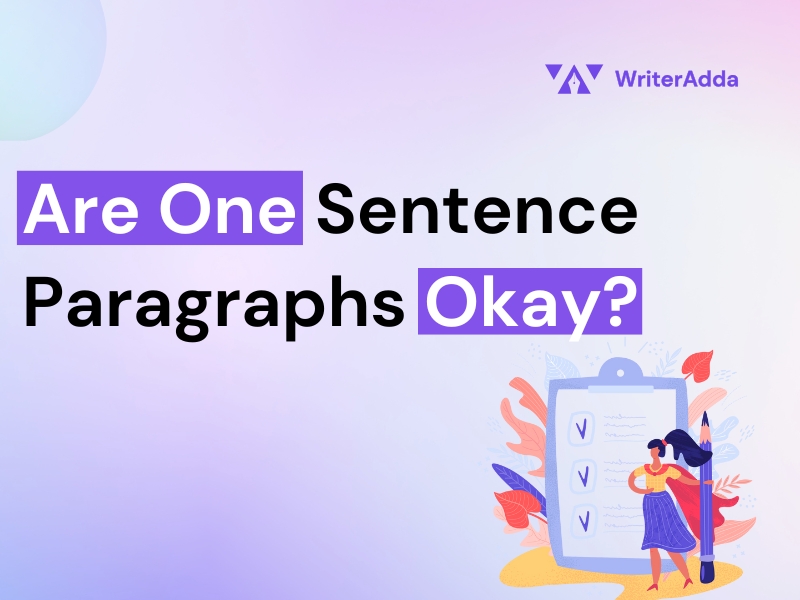
The art of writing is not just what you write but also how you write it. In the vast landscape of literature and language, there are many rules and guidelines that a writer must adhere to. One crucial element is the length of the paragraphs. Paragraphs can be written in a variety of ways, depending on the subject matter and intent of the text. Among the varied techniques that a writer can use, one-sentence paragraphs have sparked debates in recent times. Some people feel that one-sentence paragraphs look vague and boring, whereas others believe that they stand out as a concise yet powerful tool.
One-sentence paragraphs often get overlooked or misused due to a lack of proper knowledge of their usage. Whether you are a content writer, scriptwriter, author, or copywriter, understanding how and when to use one-sentence paragraphs is crucial for their optimal and effective usage. As the attention span of the audience has reduced, the importance and use of one-sentence paragraphs have increased more than ever before. In this blog, we are going to share why one-sentence paragraphs are okay and how to use them strategically to elevate the impact and effectiveness of your writing.
What Is a One-Sentence Paragraph?
A one-sentence paragraph is a standalone paragraph made up of a single sentence. It is used to create impact, emphasize a point, ensure pause and provide a clear transition in writing. It comes in two varieties:
- One short sentence that creates a significant impact by highlighting the main point.
For example, the sun dropped over the horizon and shed a warm glow across the serene beach.
- One long sentence that contains enough information to sustain multiple sentences.
For example, the fragrant aroma of freshly brewed coffee mixed with the scent of freshly baked bread as the morning sun rose, kissing the dew-covered petals of the blooming roses that lined the path leading to the charming cottage, where time seemed to slow down.
Are One-Sentence Paragraphs Okay?
One-sentence paragraphs are okay when they are used in the right way and for the right purpose. They are effective in writing for clarity and emphasis and to create a dramatic effect or pause. They boast the potential to enhance clarity, emphasize important points, create transitions within text and keep the audience hooked till the end. Have a look at what some prominent people have said in favor of one-sentence paragraphs:
In her Chicago Q&A, Carol Fisher Saller states, “Single-sentence paragraphs can add punch and variety to the writing and should not be outlawed.”
Mignon Fogarty (Grammar Girl) writes, “A short, one-line paragraph will instantly grab your reader’s attention.”
AP’s Ask the Editor states that “there is no rule on the length of a paragraph,” noting that “one-word paragraphs often are used in dialogue.”
Short or one-sentence paragraphs make it easier for readers to understand and digest the heavy content articles easily and effectively. They assist the audience in focusing on the key ideas that are critical to the content’s goal. When the viewer can easily skim the content, it causes a positive and engaging impact. One-sentence paragraphs are best for:
- Narrative Fiction
- Journalistic Style
- Travel Writing
- Argumentative Essay
- Historical Analysis
- Academic Writing
- Creative Nonfiction
- Personal Reflection
- Biographical Sketch
Example of a One-Sentence Paragraph
One-sentence paragraph formatting isolates each idea and allows readers to take a pause after every line and reflect on each thought, creating vivid imagery of the writing. Have a look at an example of one short sentence paragraph that describes the beauty and vibrancy of a beautiful city:
The valley opened like a vibrant green and blue painting from the peak.
The bustling market filled the air with the fragrance of spices and the melodic sound of local accents.
At sunset, the ocean shimmered with orange and pink, creating an idyllic canvas stretching to the horizon.
In the shadow of modern skyscrapers, the city pulsed with countless tales.
This narrative reflects the beauty of a charming city filled with natural beauty, local specialties, modern infrastructure, and a beautiful sunset. Although these lines could have been in a single paragraph, however as one-sentence paragraphs, they are more isolating and vivid for the reader. In this form, they transcend words and create a picture of the scene in the reader’s mind without any additional details.
Understanding One Sentence Paragraphs – Why and When to Use Them?
Although there is no hard and fast rule for writing one-sentence paragraphs, it’s crucial to understand why and where you can use them for their effective usage. They are found in almost every , from nonfiction, novels and newspapers to academic content, blogs and journalistic writing.
Why to use them – Purpose and Effectiveness
- Emphasis: One-sentence paragraphs place a heavy emphasis on a point by isolating it, making it stand out from the surrounding text. This tells readers that the information is very important and encourages them to focus on that deeply. For example, “She couldn’t believe it.”
- Dramatic Effect: When used strategically, they can create a sense of drama or tension by causing a dramatic pause, which draws attention to important information. They emphasize crucial moments, evoke emotional responses and build suspense in storytelling and other writings.
- Variation: One-sentence paragraphs are useful for visual and rhythmic variation. They break text into one-sentence paragraphs that improve readability and prevent the monotony of basic writing.
- Transition: It works as a transition between different sections, lines or ideas, creating a smooth shift between the narrative and contexts. This ensures that the readers follow the intended flow of thought in the desired manner.
- Decluttering: One-sentence paragraphs offer clutter-free immediacy, which pulls the reader’s interest and makes them delve into each line of the article. This boosts the connection between writer and reader, reducing narrative distance.
When to Use One Sentence Paragraphs:
- Urgent Information: One-sentence paragraphs are used to communicate urgent information to provide value and encourage decision-making.
- Key Points: They highlight key points, including crucial information, main ideas, takeaways, perspectives, and conclusions.
- Quoting Source: One-sentence paragraphs are used to quote a source, such as a famous quotation or epigraph.
- Impactful Statements: They are used to convey impactful statements, arguments, opinions, or conclusions that need to be emphasized.
- Dialogue: When writing dialogues, one-sentence paragraphs maintain clarity and enhance the readability of the content.
- Description: It can be used to describe the characteristics and specialties of a person, place or thing.
- Emphatic statement: They are used to emphasize a crucial revelation or realization like the truth, conclusion, etc.
- Descriptive Scene Setting: One-sentence paragraphs set the scene vividly with visual storytelling, sensory details, and descriptive language.
Tips and Guidelines for Using One-Sentence Paragraphs
Use Sparingly:
One-sentence paragraphs should be used deliberately and sparingly. Overusing them disturbs the flow of the text and makes the reading tedious, which makes readers bounce back.
Purpose and Intention:
Your purpose and intention should be defined and convey a clear message in your writing. This can include emphasizing key points, creating pauses, decluttering text, transitioning to new ideas, or anything else.
Standalone ideas:
One-sentence paragraphs emphasize important points that are enough in themselves to convey the meaning. Therefore, they should be used only for standalone ideas that do not require any explanation.
Contextual Relevance:
They should not be used just for the sake of breaking the text. Each one-sentence paragraph should serve a clear purpose and fit within the context of the writing.
Readability:
One-sentence paragraphs should fit into the flow of the content to maintain the readability of the overall text. There should be minimum usage only when required so that they do not disturb the overall readability.
Editing and Revision:
During the checking and editing process, review the use of one-sentence paragraphs and ensure that they are effective and serve a purpose. Remove the sentences that do not contribute and only disturb the flow.
Challenges of Using One-Sentence Paragraph
One-sentence paragraphs add depth and clarity to the key points. However, their inappropriate use can disrupt the natural flow of writing. Overusing one-sentence paragraphs leads to a negative reader experience, which makes them lose interest and bounce back. The constant breaks in the text can even make it hard for readers to follow the content with continuity.
Moreover, in formal writing, one-sentence paragraphs can even give the impression of a lack of depth, which ultimately questions the writer’s credibility and research. Additionally, great writing skills are required to transition in and out of such sentences smoothly without disturbing the flow and shifting in style and tone. Abrupt shifts can even confuse readers and break the rhythm of reading.
Conclusion
One-sentence paragraphs are powerful tools to add emphasis, create a transition, ensure clarity, and add a dramatic effect to the writing when used correctly. They enhance readability and coherence, create a vivid description and make a memorable impact on the reader’s mind. It breaks down the monotonous text and gives readers space to understand and digest the content and its underlying meaning. Make sure to use one-sentence paragraphs sparingly only where they serve a purpose and fit in the context of the content; otherwise, they can disturb the flow and readability.